


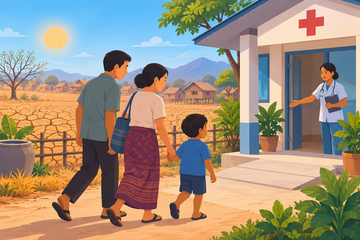
❤️🩹 Keep children healthy, safe and well
🧼 Diarrhoea and other water-related illnesses become more common when water is scarce and dirtier, simple habits can protect your family.
💉 Keep up childhood vaccinations on schedule
Outbreaks of measles and other preventable diseases are more likely when communities are displaced or weakened by drought.
💊 If you or a family member takes regular medicine for an ongoing health condition, try to keep taking it as prescribed
Even when food is short. If this becomes hard, talk to a health worker; they can help you find a way that works, without judgement.
🛑 Do not delay seeking care. If anyone in your household is unwell, visit your nearest health facility as early as possible - early treatment prevents small problems becoming dangerous ones.
👩🏽❤️👨🏾 Keep children safe and learning
Drought puts real pressure on families, and this can raise risks for children - like leaving school, being asked to work, or early marriage. Knowing the signs helps you protect the children around you.
🏫 Keeping children in school protects them
School can also be a source of food, water and routine. If a child you know stops attending, gently ask why, and connect the family with support rather than judging the decision - many families are doing their best in a very hard situation.
🚨 No child should be alone without adult care
If you know of an unaccompanied or separated child, connect them to child protection workers or community leaders right away.
📲 If a child needs help, or you want to report a concern about a child's safety, contact your local authorities.
📢 All humanitarian aid is FREE. No one should ever ask you for money, favours or anything else in exchange for assistance. If you suspect, experience or witness this, you should be able to report it safely and confidentially.
These services should also be confidential.
🆘 Cope with stress and support each other
Not being able to provide for your family the way you want to is one of the hardest parts of drought - and many parents across your country are carrying that same weight right now. You are not failing; you are doing your best in a very hard situation.
🫂 All emotions are valid. Finding ways to express them - talking, music, prayer, working with your hands - can help. Try what works best for you.
❤️ You are not alone
Checking in on neighbours, sharing what little you have, and working together as a community can be as important for wellbeing as anything you do alone. Community connection is one of the strongest ways families get through drought.
👧🏽🧒🏽 For children:
Give them chances to talk about how they feel, listen without judgement, and reassure them the situation is not their fault and will not last forever. Limit their exposure to distressing news or conversations about the crisis.
👩🏽⚕️ If worry, sadness or stress does not ease over time, or you notice a child struggling for weeks, it's worth reaching out for support
Please contact your local mental health support provider as verified by your local authorities.
Click NEXT to learn how to prepare for wildfires and smoke 👇🏽
 Facebook
 X
 LinkedIn
 WhatsApp
 Email
 Copy Link
Average Rating: ☆ ☆ ☆ ☆ ☆ (0 reviews)