


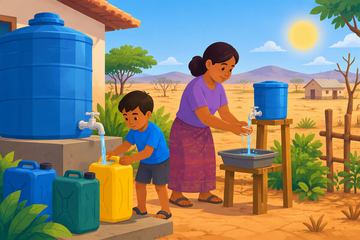
💧Use water safely and keep It clean
Every drop matters during drought — and knowing how to manage what you have can protect your whole family. Here's what to remember:
1️⃣ Prioritise your water: drinking and cooking first, then hygiene, then livestock and agriculture.
2️⃣ Share water sources fairly within your community — this helps prevent conflict and protects everyone.
3️⃣ Protect sources from contamination: keep animals away, dispose waste away from water, and keep latrines away from water points.
🚰 Make drinking water safer
Drought can affect the water your family uses for drinking and cooking. Water may contain harmful germs even when it looks clear.
Treating and storing water safely can help prevent diarrhoea and other illnesses.
💧 When should I use safe water?
Use safe or properly treated water to:
- Drink.
- Prepare food or infant formula.
- Wash fruits and vegetables.
- Clean cooking and eating utensils.
- Brush teeth.
- Clean wounds.
🧼 Before treating water
Use the cleanest water available. If the water is cloudy or contains visible dirt:
- Let the dirt settle.
- Filter the water through a clean cloth into another clean container.
- Apply the treatment method approved by your local authorities.
Filtering removes visible dirt, but it does not necessarily remove harmful germs.
🔥 How can I treat water?
Follow locally approved instructions. Depending on the context, approved methods may include:
- Boiling.
- Water-purification tablets.
- An approved chlorine product.
- Another method recommended by local authorities.
⚠️ Only follow verified recommendations for specific products, concentrations, container sizes and waiting time.
🪣 Store treated water safely:
- Use a clean, covered container.
- Use a narrow-necked container or one with a tap, if available.
- Use a clean cup or ladle.
- Avoid touching the water with your hands.
- Keep water away from animals, waste and chemicals.
- Clean the container regularly using locally approved instructions.
⚠️ Remember
Treated water may not look, smell or taste different. Appearance alone cannot confirm that water is safe.
Always follow the approved treatment instructions and waiting time.
📲 If you are unsure and have any of the following concerns contact your local authorities:
- You do not know whether the source is safe.
- You are unsure which treatment product to use.
- Treatment products are unavailable.
- The water may contain chemicals, salt or another contaminant that household treatment may not remove.
✅ What you can do today: Check how your household treats and stores drinking water. Decide when you will next treat your water or clean the storage container.
Click NEXT to learn how to protect children’s nutrition when food is scarce 👇🏽
 Facebook
 X
 LinkedIn
 WhatsApp
 Email
 Copy Link
Average Rating: ☆ ☆ ☆ ☆ ☆ (0 reviews)